Spanish Fork Mold Pros
Spanish Fork Industrial Park Mold Inspection

Mold Inspection in Spanish Fork Industrial Park for Shops, Warehouses and Offices

Mold Inspection in Spanish Fork Industrial Park is built around the buildings you actually run here: wide-span warehouses, flat roofs, heavy HVAC systems and offices tucked behind shop floors. We check the roof drains, the air handlers, the wall cavities and the slab edges, then tell you plainly where moisture is sitting and what it is growing. If you have smelled something musty near Commerce Way or watched a ceiling tile stain spread after a storm, we can find the source and put numbers behind it.

4
Years serving Spanish Fork Industrial Park
600+
Buildings assessed
cold-weather roof leak season
Right now in Spanish Fork Industrial Park

About this area

Mold Inspection in Spanish Fork Industrial Park, Built for Industrial Buildings

Why we work in Spanish Fork Industrial Park

We serve Spanish Fork Industrial Park because the buildings here fail in ways residential inspectors rarely see. Flat roofs with ponding water, large HVAC systems that pull humid air through long duct runs, and warehouse humidity control that gets switched off to save money in the shoulder seasons. Add the freeze-thaw cycle along the I-15 corridor and you get roof leaks that show up in January and mold growth that shows up in March. We know which buildings have had repeat roof issues, which landlords want documentation for tenants, and how to work around a shift schedule so we are not in the way.

Moisture mapping, air sampling and lab-backed answers for industrial buildings

Spanish Fork Mold Pros has worked Spanish Fork Industrial Park since 2022, and this is not a neighborhood of houses. It is a working district of warehouses, fabrication shops, cold storage, truck yards and small offices, all sitting on flat ground between Spanish Fork Airport and the rail corridor along Commerce Way. That mix changes how mold inspection in Spanish Fork Industrial Park works. Water does not run downhill into a basement here; it ponds on flat roofs, wicks up block walls, and drips into insulation above a shop floor. We bring a moisture meter, a thermal imaging camera and a borescope camera into every building, and we map what we find before we recommend anything. If you manage a building in the Enterprise Zone, you need answers you can hand to an owner, a tenant or an insurer, and that is what we produce.

Services available

Mold Inspection Services We Run in Spanish Fork Industrial Park

Every service we offer gets used somewhere in Spanish Fork Industrial Park, but the mix is different than in a residential neighborhood. Commercial mold inspection, HVAC mold inspection and roof leak mold inspection make up most of our calls here, followed by air quality testing when a tenant complains about odors. If you have been searching for mold inspection in Spanish Fork Industrial Park UT near me, this is the list of what we actually do when we arrive.

How we work locally

How We Run Mold Inspection in Spanish Fork Industrial Park

Challenge: Flat roofs with ponding water and clogged drains

Ponding water finds every seam and penetration on a flat roof, and in Spanish Fork Industrial Park that means leaks show up in ceiling tiles, insulation and wall cavities far from the actual entry point. We often find mold growth 15 to 20 feet away from the visible stain.

Solution: We inspect the roof surface, drains and scuppers first, then trace water paths downward with a thermal imaging camera and moisture meter. Ceiling tiles, insulation and decking get checked along the whole path, not just at the stain. You get photos of the entry point and every affected area below it.

Challenge: Large HVAC systems pulling humid air through long duct runs

Big rooftop units and long duct runs can spread mold spores to every zone in a building. Dirty coils, poorly pitched drain pans and saturated duct insulation are common in this park, and they turn the HVAC system into a distribution network for contamination.

Solution: We inspect air handlers, coils, drain pans, flex duct and duct insulation, then sample the air at return and supply registers. If the coil or pan is the source, we document it and include duct cleaning and coil repair in the protocol. Clearance testing after remediation confirms the system is clean.

Where we work

Industrial Park coreCommerce Way corridorEnterprise ZoneSpanish Fork Airport areaNorth Spanish Fork industrial edgeSouth Spanish Fork industrial edge

Service area

Spanish Fork Industrial Park

Latitude: 40.1097

Extract Directions

Case files

Recent project: 1

Commerce Way corridor

Challenge

A warehouse tenant near Commerce Way reported a musty smell in the office area that got worse after every rainstorm. The roof had been patched twice, but the smell kept coming back.

Execution

We inspected the roof, ceiling plenum and office wall cavities with a thermal imaging camera and moisture meter. The leak was entering at a roof drain 18 feet from the visible stain, soaking insulation and the top plate of an interior wall. We collected tape lift samples and air samples, wrote a remediation protocol following IICRC S520, and returned for clearance testing after the work was done.

Impact

Lab results confirmed mold growth in the wall cavity and elevated spore counts in the office air. After remediation and clearance testing, spore counts returned to normal outdoor levels, and the tenant renewed their lease.

Recent project: 2

Enterprise Zone

Challenge

A property manager in the Enterprise Zone called about a musty odor in a converted office space. The building had been a shop decades earlier, and the HVAC system had never been updated for office use.

Execution

We inspected the air handler, ductwork and crawl space under the office. The evaporator coil drain pan was not pitched correctly, so it held standing water and had visible growth. Duct insulation was also saturated. We sampled the air at three registers, documented the findings, and recommended coil repair, duct replacement and crawl space vapor barrier work.

Impact

Air samples showed elevated mold spores in two of three office zones. After the recommended work and a follow-up clearance test, the odor was gone and the property manager had documentation for the building owner.

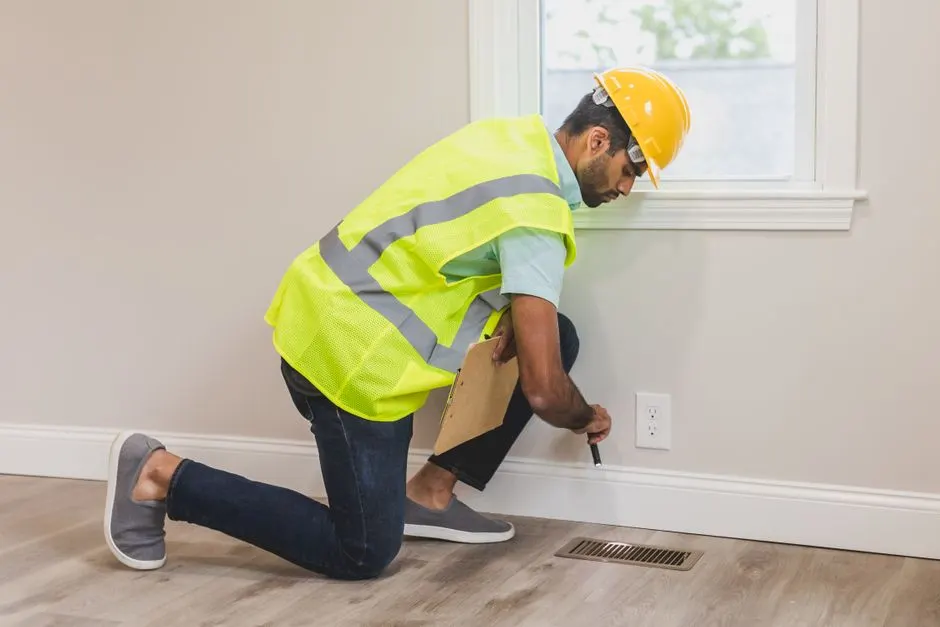
Construction worker with hard hat and vest inspecting window indoors, side view.
Our track record
Our track record

Field Evidence from Spanish Fork Industrial Park

What Four Years in the Park Looks Like

Since 2022, we have inspected more than 600 buildings across Spanish Fork and the surrounding area, and a large share of those were commercial and industrial properties inside this park. The pattern is consistent: roof leaks and HVAC problems cause most of the mold we find. In one stretch along Commerce Way, we inspected eleven warehouses over two years and found moisture intrusion in nine of them, most commonly at roof drains and overhead door frames. Air quality testing in Spanish Fork Industrial Park almost always confirms what the moisture readings suggested. We keep our reports simple: photos, readings, lab results, and a plain-language summary of what needs to happen next.

600+
Buildings assessed

Local questions

Who does mold inspection in Spanish Fork Industrial Park UT?

Spanish Fork Mold Pros performs mold inspection in Spanish Fork Industrial Park and the surrounding area. We are based in Spanish Fork, licensed in Utah, and we work commercial and industrial buildings throughout the park, including warehouses, shops, offices and cold storage. Call 555 123 4657 to schedule.

How much does mold testing cost in Spanish Fork Industrial Park?

Most commercial mold testing in Spanish Fork Industrial Park runs $300 to $900 for the inspection, plus $50 to $100 per lab sample. A small office might need two or three samples; a large warehouse with multiple zones might need eight or more. We give you a clear quote before we start.

Is mold inspection worth it in Spanish Fork Industrial Park?

Yes, especially for commercial buildings where a hidden mold problem can affect tenants, employees and your lease obligations. Finding the source before remediation saves thousands. We have inspected over 600 buildings since 2022, and the pattern is consistent: early inspection is cheaper than late remediation.

Licensed and insured

Licensed, Insured and Compliant in Utah

Mold inspection in Utah requires a state license, and we carry one. We also carry general liability insurance and follow OSHA mold standards for worker protection on every job. Our team holds IICRC WRT and ACAC certifications, and we build every remediation protocol around IICRC S520. For commercial buildings in Spanish Fork Industrial Park, that documentation matters to owners, property managers, insurers and tenants. We provide written reports with photos, moisture readings and lab results that stand up to review.

Utah mold inspection license
Utah general liability insurance
IICRC WRT (Water Restoration Technician) IICRC
When To Call

Signs You Need Mold Inspection in Spanish Fork Industrial Park

Most mold problems in the industrial park do not announce themselves with visible black growth. They start with a smell, a stain, or a tenant complaint. If you have been searching for mold inspection in Spanish Fork Industrial Park UT near me because something feels off in your building, here are the signs that mean it is time to call.

1. Musty odor in offices or tenant spaces

A musty smell that gets stronger after rain or when the HVAC runs is the most common sign we hear about in Spanish Fork Industrial Park. It usually means mold is growing in a wall cavity, ceiling plenum or duct run. The smell is your early warning; the growth is already there.

2. Ceiling tile stains that keep coming back

If you have replaced ceiling tiles more than once in the same spot, the roof leak was never fixed. Water is still entering, insulation is still wet, and mold is likely growing above the ceiling. Each rainstorm makes it worse.

3. Visible dark growth around vents or diffusers

Dark spotting around HVAC supply diffusers or return grilles points to mold inside the ductwork or on the coil. In large commercial systems, that contamination spreads to every zone the system serves. It needs to be sampled and addressed before it gets worse.

4. Damp or discolored walls near overhead doors

Overhead doors and dock seals leak in wind-driven rain, and the wall cavity behind them stays wet. Discolored drywall, soft framing or peeling paint near a dock door is a sign that water has been getting in for a while. We see this constantly along Commerce Way.

5. Tenant or employee complaints about air quality

When multiple people in the same building report headaches, congestion or a strange smell, the HVAC system or a hidden moisture source is usually the cause. Air quality testing can confirm whether mold spores are elevated and give you documentation to act on.

Local Problem Patterns

Common Mold Problems in Spanish Fork Industrial Park

The problems we find in Spanish Fork Industrial Park are different from what we see in residential neighborhoods. Flat roofs, large HVAC systems, warehouse humidity control and older industrial construction all create conditions that drive mold growth. If you need mold assessment Spanish Fork Industrial Park property owners trust, these are the four issues we run into most often.

Flat roof leaks and ponding water

Why it happens here

Most buildings in the park have flat or low-slope roofs, and ponding water sits on them after every storm. Seams, penetrations and drains fail over time, and water finds its way into insulation and ceiling assemblies. Freeze-thaw cycles in winter make small openings bigger.

Our approach

We inspect the roof surface, drains and scuppers first, then trace water paths downward with thermal imaging and moisture readings. We document the entry point and every affected area below it, so your roofer and your remediation contractor both know what they are dealing with.

HVAC mold contamination in large systems

Why it happens here

Big rooftop units and long duct runs are common here, and dirty coils, poorly pitched drain pans and saturated duct insulation create ideal mold conditions. The system then distributes spores to every zone it serves. Regular maintenance often gets deferred in industrial buildings.

Our approach

We inspect air handlers, coils, drain pans, flex duct and duct insulation, then sample the air at return and supply registers. If the system is the source, we document it and include coil cleaning, duct replacement and clearance testing in the protocol.

Warehouse humidity control failures

Why it happens here

When humidity control is shut off to save money in spring and fall, interior humidity climbs above 60 percent and stays there. Cardboard, wood pallets, drywall and insulation all absorb that moisture. Tenants notice the smell before they see any growth.

Our approach

We measure indoor and outdoor humidity with a hygrometer, check air changes and review how the HVAC and exhaust systems are actually running. Then we recommend setpoints, dehumidifier desiccant placement and ventilation changes that keep humidity under control year-round.

Foundation seepage in older industrial buildings

Why it happens here

Some buildings in the Enterprise Zone and along the south edge of the park have settled grading and older foundation drainage. Water seeps through block walls and slab edges, keeping the lower part of the building damp. Efflorescence and musty odors in low areas are the first signs.

Our approach

We inspect foundation walls, slab edges and interior drainage, and we check the wall cavity with a borescope camera. If seepage is active, we document it and recommend drainage and waterproofing fixes alongside any mold remediation.

Local Pricing

What Mold Inspection Costs in Spanish Fork Industrial Park

Typical 2026 pricing for mold inspection in Spanish Fork Industrial Park runs $300 to $900 for a commercial building, depending on square footage, how many areas need sampling, and whether we need after-hours access. A basic visual inspection with moisture readings on a small office or shop usually lands at the low end. A full warehouse inspection with thermal imaging, multiple air samples and a written protocol lands at the high end. Lab fees run $50 to $100 per sample. If you have been looking for affordable mold testing in Spanish Fork Industrial Park, the honest answer is that the inspection itself is the cheap part. Finding the source before you spend money on remediation is what saves you thousands.

Availability in Spanish Fork Industrial Park: We schedule commercial mold inspection in Spanish Fork Industrial Park Monday through Saturday, with early morning and evening slots available for buildings that cannot be accessed during business hours. For active leaks, sewage backups and post-flood situations, we keep after-hours slots open and can often be on site the same day. Call 555 123 4657 and tell us what is going on; we will give you an honest arrival window.

1

Building size and complexity

A 2,000 square foot office takes two hours; a 40,000 square foot warehouse with mezzanines, multiple HVAC zones and cold storage can take a full day. We price by the time and sampling needed, not by a flat rate that does not fit the building.

2

Number of samples required

Air samples, tape lifts and swab samples each carry a lab fee, usually $50 to $100 per sample. A small office might need two or three samples; a warehouse with multiple tenant spaces might need eight or more to cover all the zones.

3

Access and scheduling

After-hours, weekend and early-morning inspections cost more because we are working around your operation. For many industrial buildings in the park, that is the only way to get access without shutting down a shift, and we plan for it in the quote.

Year-Round Coverage

How Seasons Affect Mold Inspection in Spanish Fork Industrial Park

Spanish Fork Industrial Park sits in a high-desert valley with cold winters, hot dry summers and a monsoon pattern that delivers most of its rain in late summer and fall. That climate shapes when mold problems show up. If you have been looking for mold testing Spanish Fork Industrial Park 24/7, here is how the seasons drive demand.

Spring

Spring is when winter roof leaks show up as ceiling stains and musty odors. Snowmelt and spring rain find every failed seam and flashing on flat roofs. We get a surge of roof leak mold inspection calls in March and April, especially on buildings that had ponding water all winter.

Tip

Walk your roof drains and scuppers before the spring rain starts. If you see staining on ceiling tiles, call for an inspection before the growth spreads.

Summer

Summer heat drives HVAC systems hard, and that is when coil and drain pan problems become visible. High outdoor humidity during monsoon season pushes interior humidity up, especially in warehouses where humidity control is marginal. We see more HVAC mold inspection and air quality testing calls in July and August.

Tip

Check your air handler drain pans and change filters on schedule. If your building smells musty when the AC runs, get the ductwork inspected.

Fall

Fall is monsoon season in Utah, and wind-driven rain hits overhead doors, windows and wall penetrations. This is when we find the most hidden water intrusion in wall cavities. It is also the best time to fix roof issues before winter freeze-thaw makes them worse.

Tip

After the first big fall storm, check the walls and ceilings near overhead doors and windows. If you see discoloration, get it inspected before winter.

Winter

Freeze-thaw cycles open up roof seams and flashing, and ice dams can force water under roof membranes. Buildings that are heated intermittently see condensation on cold surfaces. We handle roof leak mold inspection and post-flood mold inspection throughout the winter, often after a pipe freeze.

Tip

Keep your building above freezing and check for ice dams after heavy snow. If a pipe freezes and bursts, call us the same day to assess water damage and mold risk.

Hiring Smart

What to Ask Before Hiring a Mold Inspector in Spanish Fork Industrial Park

Not every mold inspection company in the Spanish Fork area works the same way. Some are remediation companies that also inspect, which creates a conflict of interest. Some do not carry the right certifications. Before you hire anyone for mold inspection in Spanish Fork Industrial Park, ask these five questions and listen carefully to the answers.

  1. 1

    "Are you licensed and certified to perform mold inspection in Utah?"

    Why it matters

    Utah requires mold inspectors to hold a state license, and certifications like ACAC or CIEC show a higher level of training. A company that cannot produce credentials may not carry the insurance or follow the standards your building needs. Ask for the license type, not just a business card.

  2. 2

    "Do you perform remediation, or only inspection?"

    Why it matters

    If the same company inspects and remediates, there is a built-in incentive to find mold. We only inspect and test, which means our report is independent. That independence matters when you are handing results to an owner, a tenant or an insurance adjuster.

  3. 3

    "What tools and sampling methods do you use?"

    Why it matters

    A proper inspection uses a moisture meter, thermal imaging camera and borescope camera, not just a visual walk. Air sampling with spore traps and lab analysis gives you numbers. If a company only does a visual inspection, you are not getting the full picture.

  4. 4

    "How long until I get the report and lab results?"

    Why it matters

    Most lab results come back in two to three business days, and the written report should follow quickly. If a company cannot give you a clear timeline, you may be waiting weeks for information you need to make decisions. Ask what the report includes before you book.

  5. 5

    "Do you follow IICRC S520 and provide clearance testing?"

    Why it matters

    IICRC S520 is the standard for mold remediation, and clearance testing confirms the work actually solved the problem. A company that writes protocols to S520 and offers post-remediation clearance testing is set up to handle commercial buildings properly. That is the standard we hold ourselves to.

Knowing the Area

Landmarks We Use to Navigate Spanish Fork Industrial Park

When we schedule a mold inspection in Spanish Fork Industrial Park, we orient around the landmarks everyone here knows. Spanish Fork Airport is the northern anchor, Commerce Way is the main spine, and the rail corridor marks the eastern edge. Those reference points let us give you an accurate arrival window and help us route around truck traffic at shift changes. If your building is tucked behind another one or shares a yard, we will ask for the nearest landmark so we do not end up at the wrong dock.

Landmarks

  • Spanish Fork Airport

    The airport is the northern anchor of the industrial park and a useful reference point for scheduling. Buildings near the airport often have hangar-style construction with condensation issues, and we route to them via the airport road to avoid Commerce Way truck traffic.

  • Commerce Way

    Commerce Way is the main spine of the park and the address line for many of our commercial mold inspection calls. We use it as a routing reference and know which sections have the heaviest truck traffic at shift change, so we can plan arrival windows accordingly.

  • Spanish Fork Industrial Park rail corridor

    The rail corridor along the east side of the park marks the boundary between industrial buildings and the rest of Spanish Fork. Buildings that back up to the rail line often have older construction and more foundation seepage, and we check those walls carefully.

Commercial Districts

  • Commerce Way business strip

    The Commerce Way strip has the densest concentration of commercial and industrial tenants in the park. Mold inspection demand here is driven by roof leaks, HVAC contamination and tenant complaints about musty odors. We handle a steady flow of commercial mold inspection calls along this strip.

  • Enterprise Zone commercial cluster

    The Enterprise Zone cluster includes offices, light industrial and mixed-use buildings. Demand here leans toward pre-purchase mold inspection, rental property mold inspection and air quality testing when tenants report odors. Older building stock means more crawl space and foundation issues.

Transport & Access

  • Interstate 15 Spanish Fork interchange

    The I-15 interchange is a few minutes from the park and is how we reach most jobs from the south or north. It also means out-of-area property managers can meet us on site without a long detour.

  • Spanish Fork Airport

    Spanish Fork Airport sits at the north end of the industrial park and provides a secondary access route when Commerce Way is congested. We use it for airport-area and north-park jobs.

Nearby Cities and Areas We Serve from Spanish Fork Industrial Park

Spanish Fork Industrial Park is our commercial base, but we cover the whole Spanish Fork area and the surrounding communities. If your building is in the park, we are close. If it is in one of the neighborhoods below, we are still usually on site the same day or next morning. Here is how the surrounding areas relate to the park.

Service Area

Mold Inspection Coverage Across Spanish Fork Industrial Park & Utah County

Routine and same-week appointments for residents and businesses across Utah County, including the ZIP codes below.

84660
!

Schedule Mold Inspection in Spanish Fork Industrial Park Today

If you manage or own a building in Spanish Fork Industrial Park and something smells musty, looks stained or has been wet, do not wait for it to get worse. We are based in Spanish Fork, we know this park, and we can usually be on site the same day or next morning. Call 555 123 4657 or fill out the contact form and tell us what is going on. We will give you an honest assessment and a clear next step.

Book inspection
Call Now: 555 123 4657