
Spanish Fork Mold Pros
Spanish Fork Airport Area Mold Inspection

Mold Inspection in Spanish Fork Airport Area you can schedule same week

When you need Mold Inspection in Spanish Fork Airport Area, our team brings moisture meters, thermal imaging cameras and air sampling pumps straight to your door. We work the Airport District, Aviation Park and the Hangar Area every week, checking flat roofs, large HVAC systems and high-water-table crawl spaces before mold spreads. You get a written report with lab results, not a sales pitch.

2022
Serving Spanish Fork Airport Area since
1,400+
Inspections completed
fall roof-leak season
Right now in Spanish Fork Airport Area

About this area

Mold Inspection in Spanish Fork Airport Area built around hangars and flat roofs

Why we work in Spanish Fork Airport Area

We serve Spanish Fork Airport Area because the buildings here fail in ways that get missed. Flat roofs pond water after every heavy storm, and the leak shows up 20 feet away on a ceiling tile. Large HVAC systems pull humid outside air into conditioned space. The high water table keeps foundation walls and crawl spaces wet even in a dry summer. We have walked enough of these buildings to know where to look first. That is why property managers around the Spanish Fork Airport Hangars call us before they call a general contractor.

Moisture mapping, thermal imaging and lab-backed sampling for hangars, homes and commercial buildings

Spanish Fork Airport Area is not a typical residential neighborhood, and we do not treat it like one. Between the Spanish Fork Municipal Airport, the rows of hangars and the commercial buildings around Aviation Park, this part of 84660 has flat roofs that pond water, oversized HVAC systems that run year-round and a high water table that keeps crawl spaces damp. Those three things create mold problems you will not find in most Utah County subdivisions. We have served this area since 2022, and our Mold Inspection in Spanish Fork Airport Area starts with the building type, not a generic checklist. For hangars and commercial spaces, that means checking roof drains, RTU pans and ductwork. For homes near the Hangar Area, it means moisture mapping the slab edge and testing the air. If you search for mold inspection near Spanish Fork Airport Area, you want someone who already knows how these buildings fail. We do.

Services available

Mold Inspection services we run in Spanish Fork Airport Area

Every service below is available in Spanish Fork Airport Area, from the Hangar Area to Aviation Park. If you need mold testing Spanish Fork Airport Area 24/7 after a roof leak or a sewage backup, call the number on this page and we will get someone out. Most standard inspections book within two business days, and same-day mold inspection in Spanish Fork Airport Area UT is often possible when you call before noon.

How we work locally

How Mold Inspection in Spanish Fork Airport Area actually gets done

Challenge: Flat roofs pond water and leak into ceiling cavities

Ponding water on a flat roof finds the lowest point and leaks there, which is often 15 to 30 feet from the visible ceiling stain. That means we have to trace the leak path across the roof deck and through the insulation before we can document the mold growth accurately.

Solution: We start on the roof and map the drain paths, then work down through the ceiling cavity with a borescope camera and a moisture meter. We mark the full extent of wet insulation and decking so your roofer and your remediation crew both know exactly what to fix.

Challenge: Large HVAC systems pull humid air into conditioned space

Big rooftop units and makeup air systems in Aviation Park and the Hangar Area bring in outside air that can push indoor relative humidity above 60 percent. That is the threshold where mold growth accelerates on coils, drain pans and duct liner.

Solution: We measure supply and return air with a hygrometer, inspect the air handler and drain pan with a borescope camera, and check a representative run of ductwork. If humidity is the driver, we recommend ventilation and humidity control fixes, not just cleaning.

Neighborhoods we serve

Airport DistrictAviation ParkHangar AreaSpanish Fork Municipal Airport vicinity84660 commercial corridorWest side of the airport

Service area

Spanish Fork Airport Area

Latitude: 40.1097

Extract Directions

Case files

Recent project: 1

Hangar Area

Challenge

A hangar tenant near the Spanish Fork Airport Hangars noticed a musty smell in a storage room and staining on a wall shared with the adjacent unit. The roof had ponded water after a fall storm.

Execution

We inspected the roof, traced the leak to a clogged drain, and used a borescope camera and moisture meter to map the wet wall cavity. We collected tape lift samples and sent them to the lab. The report documented mold growth on the drywall and insulation, and we wrote a remediation protocol following IICRC S520.

Impact

The tenant fixed the roof drain, the remediation crew worked from our protocol, and clearance testing passed on the first try. Total time from inspection to clearance was 11 days.

Recent project: 2

Aviation Park vicinity

Challenge

A homeowner near Aviation Park reported a musty odor in the living room and a soft spot in the wood floor near the foundation wall. The home sits close to the high water table.

Execution

We moisture-mapped the slab edge and found elevated readings along two walls. A borescope camera showed mold growth on the back of the drywall and on the rim joist in the crawl space. We recommended encapsulation liner and a dehumidifier desiccant setup, plus a foundation drainage fix.

Impact

The homeowner fixed the drainage, installed the encapsulation system, and we confirmed dry conditions on a follow-up visit 30 days later. Moisture readings dropped from 22 percent to 11 percent.

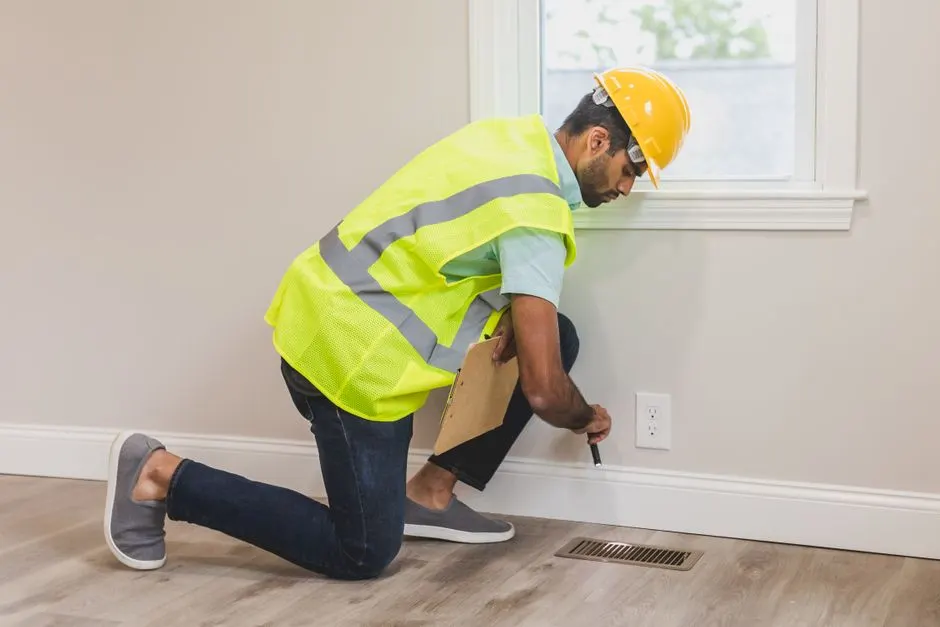
Close-up of home inspector holding a checklist on a clipboard with a pen.
Our track record
Our track record

Field evidence from Spanish Fork Airport Area jobs

What we find in Spanish Fork Airport Area

Since 2022 we have completed more than 1,400 mold inspections across Spanish Fork, and Spanish Fork Airport Area is one of our most consistent routes. The pattern here is different from the rest of Utah County. Roughly 6 out of 10 commercial calls in Aviation Park and the Hangar Area trace back to a flat-roof leak or an HVAC drain pan. Residential calls near the Hangar Area are more often crawl space moisture from the high water table. We document every job with photos, moisture readings and, when sampling is warranted, lab results. That record is why property managers around the Spanish Fork Municipal Airport keep our number on file.

1,400+
inspections completed

Local questions

Who does mold inspection in Spanish Fork Airport Area UT?

Spanish Fork Mold Pros does mold inspection in Spanish Fork Airport Area and the rest of ZIP 84660. We have served the area since 2022 and run a regular route through the Airport District, Aviation Park and the Hangar Area. Call 555 123 4657 to schedule.

How much does mold testing cost in Spanish Fork Airport Area?

Typical 2026 pricing in Spanish Fork Airport Area runs $250 to $650 for a standard inspection, with lab sampling adding $150 to $300 per set. Large commercial buildings in Aviation Park cost more because of square footage and HVAC zones. We quote flat rates before we start.

Is mold inspection worth it in Spanish Fork Airport Area?

Yes, especially for hangars and commercial buildings with flat roofs and large HVAC systems. A $250 to $650 inspection can catch a roof leak before it spreads and save thousands in remediation. It also gives you documentation for insurance and tenants.

Licensed & insured

Licensed, insured and compliant in Spanish Fork Airport Area

Mold inspection in Utah is a licensed trade, and we carry the state mold inspection license plus general liability and errors and omissions insurance. That matters in Spanish Fork Airport Area, where commercial buildings in Aviation Park and the Hangar Area often need documentation for insurers, tenants and OSHA compliance. We follow IICRC S520 for assessment and remediation protocols, and we use EPA mold guidelines and OSHA mold standards as reference points on every commercial job. Our technicians hold IICRC WRT and ACAC certification, and we keep those current. If you need proof of license or insurance before we start, ask and we will send it.

Utah mold inspection license
Utah general liability and E&O insurance
IICRC WRT (Water Damage Restoration Technician) IICRC
When To Call

Signs you need Mold Inspection in Spanish Fork Airport Area

Most mold problems in Spanish Fork Airport Area announce themselves before you see growth. A musty smell in a hangar, a ceiling stain after a storm, or a soft spot in a floor near the foundation are all early warnings. If you have been searching for mold inspection in Spanish Fork Airport Area UT near me, these are the signs that should push you to call. The sooner we inspect, the less material has to come out.

1. Musty odor in a hangar or storage room

A musty smell in a hangar or storage room usually means mold is growing in a wall cavity or on stored materials. In Spanish Fork Airport Area, this often traces back to a roof leak or condensation from temperature swings. The smell is your first warning, and it is worth an inspection before the growth spreads.

2. Ceiling stain after a storm

A ceiling stain after a storm means water got through the roof, and mold can start in 24 to 48 hours. On flat roofs in Spanish Fork Airport Area, the leak is often 15 to 30 feet from the stain. We trace the leak path and document the mold growth before it spreads.

3. Soft spot in a wood floor near a foundation wall

A soft spot in a wood floor near a foundation wall usually means moisture is wicking up from the slab or coming through the cove joint. With the high water table in Spanish Fork Airport Area, this is common. We check the subfloor with a moisture meter and look for mold on the underside.

4. Humidity above 60 percent indoors

Indoor relative humidity above 60 percent is the threshold where mold growth accelerates. Large HVAC systems in Aviation Park and the Hangar Area can push humidity up if they are not managing outside air properly. We measure with a hygrometer and recommend fixes.

5. Visible black spots on drywall or trim

Visible black spots on drywall or trim are a sign that mold has already colonized the surface. In Spanish Fork Airport Area, this often follows a slow leak or a window and door leak. We collect tape lift samples to confirm the genus and document the extent.

Local Problem Patterns

Common Mold Inspection problems in Spanish Fork Airport Area

Spanish Fork Airport Area has a specific set of mold drivers: flat roofs with ponding, large HVAC systems, a high water table and a mix of older and newer buildings. Those factors show up in the calls we get week after week. If you need mold assessment Spanish Fork Airport Area property owners trust, start by understanding which of these problems applies to your building.

Flat roof leaks that pond water and feed mold in ceiling cavities

Why it happens here

Flat roofs around the Spanish Fork Municipal Airport pond water because the drains are undersized or clogged. The water finds the lowest point and leaks into the ceiling cavity, where insulation holds moisture and mold grows out of sight.

Our approach

We start on the roof, map the drain paths and trace the leak down through the ceiling cavity with a borescope camera and moisture meter. We document the full extent of wet insulation and decking so your roofer and remediation crew both know what to fix.

HVAC mold contamination in large commercial systems

Why it happens here

Large rooftop units in Aviation Park and the Hangar Area pull in humid outside air. If the system does not manage that moisture, it condenses on coils and drain pans, and mold grows on the wet surfaces and duct liner.

Our approach

We inspect the air handler, drain pan and a representative run of ductwork with a borescope camera. We measure supply and return air with a hygrometer. If humidity is the driver, we recommend ventilation and humidity control fixes, not just cleaning.

Crawl space moisture from the high water table

Why it happens here

The water table in Spanish Fork Airport Area sits close to the surface, so crawl spaces stay humid even in dry weather. That constant moisture feeds mold on rim joists, insulation and the back of drywall.

Our approach

We check the vapor barrier, rim joists and foundation walls with a moisture meter and borescope camera. When moisture is ongoing, we recommend encapsulation liner and a dehumidifier desiccant setup, plus a drainage fix if the source is outside.

Attic mold from roof leaks and bath fan failures

Why it happens here

Attic mold in Spanish Fork Airport Area often comes from a roof leak or a bath fan that dumps humid air into the attic instead of outside. Both keep the roof deck wet, and mold grows on the decking and trusses.

Our approach

We inspect the roof deck, trusses and insulation from above and below, and we check bath fan terminations. If we find growth, we document the extent and recommend a remediation protocol that follows IICRC S520.

Local Pricing

What Mold Inspection costs in Spanish Fork Airport Area

Typical 2026 pricing for Mold Inspection in Spanish Fork Airport Area runs $250 to $650 for a standard residential or small commercial inspection, depending on size and how many samples we collect. Air quality testing with lab analysis usually adds $150 to $300 per set of samples. Large commercial buildings in Aviation Park or the Hangar Area can run higher because of square footage and the number of HVAC zones. We quote flat rates before we start, so you know the number up front. If you have been looking for affordable mold testing in Spanish Fork Airport Area, ask us for a quote and we will tell you exactly what it covers.

Availability in Spanish Fork Airport Area: We schedule Spanish Fork Airport Area inspections Monday through Saturday, with early morning slots available for commercial buildings so we are not in the way of tenants. For post-flood or sewage backup calls, we offer 24/7 response. Same-day mold inspection in Spanish Fork Airport Area UT is often possible if you call before noon. Call 555 123 4657 and we will tell you the next available slot.

1

Building size and layout

A 1,200-square-foot home near the Hangar Area takes two to three hours. A 10,000-square-foot warehouse in Aviation Park can take most of a day. Square footage and the number of rooms or zones drive the base price more than anything else.

2

Number of lab samples

Air quality testing with spore traps and lab analysis adds cost per sample set. Most residential jobs need two to three indoor samples plus one outdoor control. Commercial jobs in Spanish Fork Airport Area often need more because of multiple HVAC zones.

3

Access and building type

Crawl spaces, flat roofs and tight mechanical rooms take longer to inspect safely. A hangar with a high roof deck or a commercial building with limited attic access adds time. We factor that into the quote so there are no surprises.

Year-Round Coverage

How seasons affect Mold Inspection in Spanish Fork Airport Area

Spanish Fork Airport Area sees four distinct seasons, and each one changes where mold shows up. Fall and winter bring roof leaks and snowmelt intrusion. Spring brings snowmelt and foundation seepage. Summer brings humidity and HVAC condensation. If you are looking for mold testing Spanish Fork Airport Area 24/7, we run calls in every season.

Spring

Spring snowmelt and rain push water against foundations and into crawl spaces. In Spanish Fork Airport Area, the high water table makes foundation seepage more likely. We see mold on rim joists and the back of drywall.

Tip

Check your crawl space and basement walls for dampness in March and April. If you see efflorescence or smell mustiness, book an inspection before summer.

Summer

Summer heat and humidity load up HVAC systems in Aviation Park and the Hangar Area. Condensation on coils and drain pans feeds mold, and ductwork can spread spores through the building. Indoor humidity often climbs above 60 percent.

Tip

Measure indoor humidity with a hygrometer. If it stays above 60 percent, book a ventilation and humidity control assessment before the mold takes hold.

Fall

Fall storms are when flat roofs in Spanish Fork Airport Area start ponding and leaking. Ceiling stains and musty odors show up weeks later. This is our busiest season for roof leak mold inspections.

Tip

After the first big fall storm, walk your building and look for ceiling stains or new musty smells. Book an inspection early, before the leak spreads.

Winter

Winter freeze-thaw cycles open up roof and window leaks, and snowmelt finds its way into attics and wall cavities. Heating systems dry out the air, but leaks still feed mold in cold spaces. Attic mold from roof leaks is common.

Tip

Check your attic after the first snowmelt for staining or musty smells. If you see either, book an attic mold inspection before spring.

Hiring Smart

What to ask before hiring a Mold Inspection in Spanish Fork Airport Area

Not every mold inspector in Spanish Fork Airport Area does the same work. Some just walk through and give you a verbal opinion. Others collect samples and write a report you can use with an insurer or a remediation contractor. These are the questions that separate a strong inspector from a weak one.

  1. 1

    "Are you licensed and insured in Utah?"

    Why it matters

    Utah requires mold inspectors to hold a state license, and insurance protects you if something goes wrong on the job. A licensed inspector has met the state's training and exam requirements. Ask to see the license before you book.

  2. 2

    "What tools do you use during an inspection?"

    Why it matters

    A serious inspector uses a moisture meter, a thermal imaging camera and a borescope camera, not just a flashlight. Those tools find moisture behind walls and under floors. If the answer is vague, keep looking.

  3. 3

    "Do you collect lab samples, and who analyzes them?"

    Why it matters

    Lab-backed sampling with spore traps or tape lifts gives you genus-level identification and concentration. That documentation matters for insurance claims and remediation protocols. An inspector who does not sample is giving you an opinion, not evidence.

  4. 4

    "Will I get a written report with photos and moisture readings?"

    Why it matters

    A written report with photos and moisture readings is what your remediation contractor, insurer or tenant needs. A verbal summary is not enough. Ask to see a sample report before you hire.

  5. 5

    "Do you follow IICRC S520 for assessment and documentation?"

    Why it matters

    IICRC S520 is the standard for mold assessment and remediation. An inspector who follows it will document contamination, containment and clearance criteria properly. That keeps your project defensible if anyone questions the work.

Knowing the Area

Landmarks we use to navigate Spanish Fork Airport Area

Spanish Fork Airport Area is easy to navigate once you know the landmarks. We use the Spanish Fork Municipal Airport as our main reference point, then work outward to the hangar rows and Aviation Park. If you are giving us directions, tell us which hangar row or which Aviation Park building you are in and we will find you. Most of our Spanish Fork Airport Area work is within a few minutes of the airport entrance.

Landmarks

  • Spanish Fork Municipal Airport

    The airport is the center of our Spanish Fork Airport Area route. We use it as a reference point for scheduling and for giving customers directions. Many of our commercial inspections are within a half-mile of the terminal.

  • Spanish Fork Airport Hangars

    The hangar rows are where we do a lot of roof-leak and condensation inspections. Hangar owners and tenants call us when they notice a musty smell or see staining on stored equipment. We know the common failure points in these buildings.

  • Aviation Park

    Aviation Park is our main commercial inspection zone in Spanish Fork Airport Area. The warehouses and flex buildings here have large HVAC systems and long duct runs, which is where we find most of the mold contamination we document.

Commercial Districts

  • Aviation Park commercial buildings

    Aviation Park businesses call us for HVAC mold inspections, roof leak documentation and tenant-related mold complaints. Most of these buildings need written reports for insurers or property managers, so lab-backed sampling is common.

  • 84660 commercial corridor

    The 84660 commercial corridor includes retail and service businesses that deal with bathroom and kitchen mold from plumbing leaks. We handle these as quick-turn inspections, often with same-week scheduling.

Transport & Access

  • Spanish Fork Municipal Airport

    The airport is the anchor of our Spanish Fork Airport Area service zone. We schedule around ramp traffic and hangar access, and we can usually be on site within 24 hours.

  • US-6 and I-15 access near Spanish Fork

    US-6 and I-15 are a short drive from Spanish Fork Airport Area, which makes it easy for us to reach the airport district from our base. That access keeps our response times short.

Service Area

Mold Inspection Coverage Across Spanish Fork Airport Area & Utah County

Routine and same-week appointments for residents and businesses across Utah County, including the ZIP codes below.

84660
!

Book Mold Inspection in Spanish Fork Airport Area today

If you have a musty smell, a ceiling stain or a damp crawl space in Spanish Fork Airport Area, do not wait for it to spread. We have served this area since 2022, we hold a Utah mold inspection license, and we follow IICRC S520 on every job. Call 555 123 4657 or fill out the form and we will get you on the schedule. Same-day slots are often available if you call before noon.

Book an inspection
Call Now: 555 123 4657