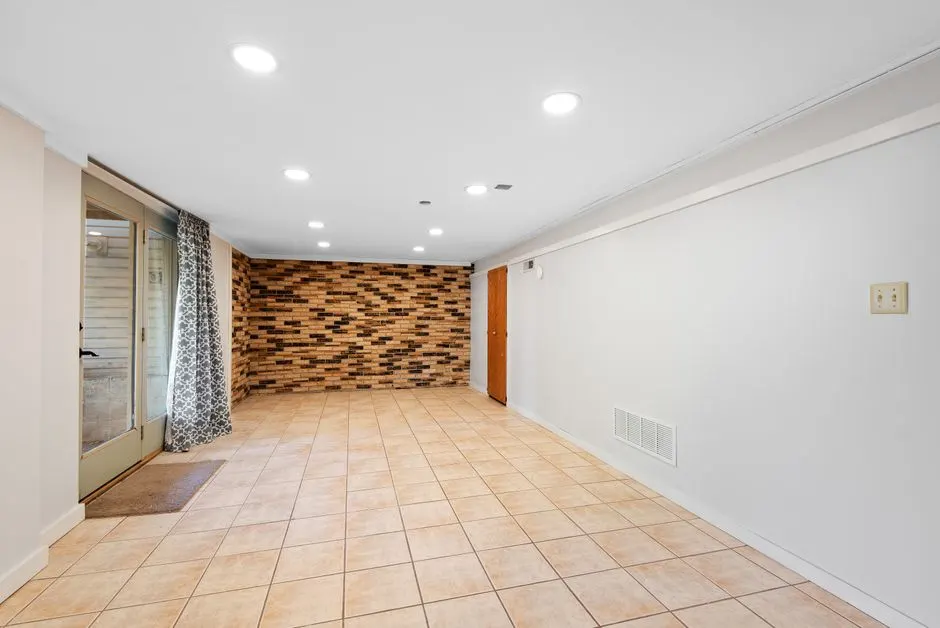
Your Spanish Fork basement smells musty in summer because warm outdoor air hits cool basement walls and floors, condensing into a thin film of moisture that feeds mold and bacteria. That smell is not just stale air - it is the byproduct of active microbial growth on concrete, drywall, carpet, or stored belongings. The rest of this post breaks down exactly where that moisture comes from in Spanish Fork homes, how to tell whether you have mold, and what actually gets rid of the smell for good.
The short answer: warm air, cool concrete, and trapped moisture
Why does my Spanish Fork basement smell musty in summer is a question about physics as much as housekeeping. Basement concrete in Spanish Fork stays around 55-65°F year-round because it sits below the frost line. When July air at 90°F and 30% relative humidity enters through an open window or stairwell, it cools fast against that concrete. Cool air holds less moisture, so the excess condenses on walls, pipes, and floor joists - the same way a cold glass sweats on a hot day.
That condensation raises surface humidity above 60%, which is the threshold where mold spores germinate. Mold produces microbial volatile organic compounds (mVOCs) as it digests organic matter. Those compounds are the musty odor you smell. A musty basement smell in Spanish Fork is almost always a moisture problem first and a cleaning problem second.
Why Spanish Fork summers make basements worse than winter
Spanish Fork sits in Utah Valley, where summer daytime highs routinely hit 92-97°F and afternoon thunderstorms roll off the Wasatch Range in July and August. That combination - dry heat followed by sudden rain - drives moisture into basements in two ways. First, the temperature differential between outdoor air and basement concrete is at its yearly peak, so condensation is heaviest. Second, rain saturates the soil around your foundation, and hydrostatic pressure pushes that water against basement walls.
Winter is actually drier for most Spanish Fork basements because the outdoor air is cold and holds little moisture. The air that leaks in during winter does not condense the way summer air does. That is why the smell shows up in June and gets worse through August, then fades in October. If your basement smells musty only in summer, the driver is seasonal condensation plus rain-driven ground moisture, not a year-round leak.
Homes built before 1980 in neighborhoods like Palmyra and the older streets near Spanish Fork Main Street often have unsealed concrete block foundations with no exterior waterproofing membrane. Those walls wick groundwater continuously. Newer builds in Salem Hills and Canyon Creek typically have poured concrete and a dimple mat, but they still get condensation on cold-water pipes and HVAC ducts.
The five moisture sources we find in Spanish Fork basements
When we run a professional mold inspection Spanish Fork UT, we check five specific sources. In our experience, 90% of musty basements trace back to one or more of these.
- Foundation wall wicking. Concrete block and poured walls pull groundwater up from saturated soil. You will see a white chalky line (efflorescence) or dark staining at the base of the wall.
- Floor slab condensation. Bare concrete floors sweat in humid summer air. Carpet or cardboard boxes sitting directly on the slab trap that moisture and grow mold within 48-72 hours.
- Window well seepage. Metal or concrete window wells collect rain and snowmelt. If the drain is clogged, water sits against the basement window frame and leaks in.
- HVAC duct condensation. Cold air blowing through uninsulated ducts in a warm basement forms condensation on the duct exterior. That moisture drips onto ceiling tiles or insulation.
- Clogged or missing gutters. Roof water that dumps next to the foundation instead of 6-10 feet away raises soil moisture against the basement wall.
We use moisture detection Spanish Fork with pin and pinless meters to map exactly where the water is coming from. That matters because treating the wrong source wastes money. If you clean mold off a wall that is still wicking groundwater, it returns in three weeks.
Does a musty smell always mean mold in Spanish Fork?
No - but it means conditions are right for mold, and in roughly 8 out of 10 basements we inspect, mold is already growing somewhere. The smell can also come from bacteria in a wet carpet pad, a damp crawl space, or a floor drain that has dried out and is letting sewer gas in. Sewer gas has a sharper, rotten-egg note; musty odor is earthy and damp.
The only way to know for sure is testing. A mold air testing Spanish Fork UT sample tells you the genus and spore count in the air. Surface samples from a wall or joist tell you what is growing on the material. We send both to an accredited lab and get results in 2-5 business days. If the spore count indoors is higher than outdoors, you have an active mold problem regardless of what you can see.
How to get rid of musty smell in basement Spanish Fork
Fixing the smell requires fixing the moisture. Air fresheners, ozone machines, and vinegar sprays mask the odor for a few days. Here is the sequence that actually works.
1. Drop the humidity below 50%
Run a dehumidifier sized for the square footage. For a 1,000-square-foot Spanish Fork basement, you need a 50-pint unit minimum; 70 pints is better if the space is open to a stairwell. Set it to 45-50% relative humidity and empty the tank daily or run a hose to a floor drain. A basement dehumidifier for musty smell Spanish Fork UT homeowners buy at a big-box store works if you maintain it - clean the filter every two weeks or it stops pulling water.
2. Seal the slab and walls
Apply a concrete sealer or epoxy coating to bare basement floors. For walls, use a masonry waterproofing paint only after you have addressed exterior drainage. Sealing a wall that is still under hydrostatic pressure traps water inside the block and makes spalling worse.
3. Move storage off the floor
Cardboard boxes, paper, and fabric are mold food. Store items in plastic bins on shelving at least 6 inches off the concrete. Keep the perimeter clear so air moves along the walls.
4. Fix exterior drainage
Extend downspouts 6-10 feet from the foundation. Clean gutters twice a year - once in late spring after pollen and once in late fall after leaves. Grade soil so it slopes away from the house at roughly 1 inch per foot for the first 6 feet.
5. Ventilate correctly
Do not open basement windows in July and August. That pulls humid outdoor air into a cool space and makes condensation worse. Instead, run a bathroom fan or an ERV (energy recovery ventilator) that exchanges air without dumping humidity inside. A humidity control inspection Spanish Fork can tell you whether your current ventilation is helping or hurting.
Common mistakes that keep the smell coming back
We see the same five mistakes over and over in Spanish Fork basements. Avoid these and you will save yourself a repeat inspection.
- Bleaching visible mold and calling it done. Bleach kills surface mold on non-porous materials, but it does not penetrate drywall, wood, or carpet. The roots survive and regrow.
- Running a dehumidifier with the basement window open. You are trying to dehumidify the entire Utah Valley. Close the window.
- Ignoring the crawl space. A musty smell upstairs often originates in a vented crawl space that stays at 80-90% humidity all summer. We inspect those separately with crawl space mold testing Spanish Fork.
- Painting over moldy drywall. Paint traps moisture and the mold eats through the paint within a few months.
- Assuming a new home cannot have mold. New construction traps moisture in lumber and concrete. We routinely find mold in Spanish Fork homes less than five years old.
When to call a professional
Call us when the smell returns within a few weeks of cleaning, when you see dark staining on walls or joists, when anyone in the house has new allergy symptoms, or when you are buying or selling a home and need documentation. We handle basement mold testing Spanish Fork with moisture mapping, thermal imaging, and lab-verified samples so you know exactly what you are dealing with before you spend money on remediation.
If you are a landlord, we also offer landlord mold testing Spanish Fork to document conditions for tenants and property records. Typical 2026 pricing for a full basement inspection in Spanish Fork runs $350-$650 depending on square footage and how many samples we collect.
Frequently Asked Questions
Why does my Spanish Fork basement smell musty in summer?
Warm outdoor air condenses on cool basement concrete, raising surface humidity above 60% and feeding mold or bacteria. Summer rain also saturates soil around the foundation and pushes moisture through walls. The smell is microbial off-gassing from that growth.
Is a musty basement dangerous in Spanish Fork?
It can be. Prolonged exposure to mold spores can trigger asthma, sinus infections, and headaches, especially in children and older adults. If the smell is strong or you see visible growth, get an inspection within 1-2 weeks rather than waiting.
How do I stop musty basement smell in Spanish Fork Utah?
Keep relative humidity below 50% with a correctly sized dehumidifier, seal the slab, move storage off the floor, and fix exterior drainage. If the smell persists after 2-3 weeks of those fixes, you likely have hidden mold and need testing.
Does a musty smell always mean mold in Spanish Fork?
No, but it means conditions favor mold. About 80% of the musty basements we inspect have active mold growth. The other 20% have bacterial growth, a dry floor drain, or damp crawl space air. Testing confirms which one you have.
How much does a basement dehumidifier cost to run in Spanish Fork?
A 50-pint unit draws roughly 500 watts and runs 8-12 hours a day in July and August. At Spanish Fork utility rates that is about $15-$25 per month. It is far cheaper than mold remediation, which typically runs $1,500-$6,000.
Get help with Mold Inspection in Spanish Fork
If your Spanish Fork basement smells musty and you want a straight answer about what is growing and why, call Spanish Fork Mold Pros at 555 123 4657. We inspect, test, and give you a written report with lab results - no guesswork, no pressure.