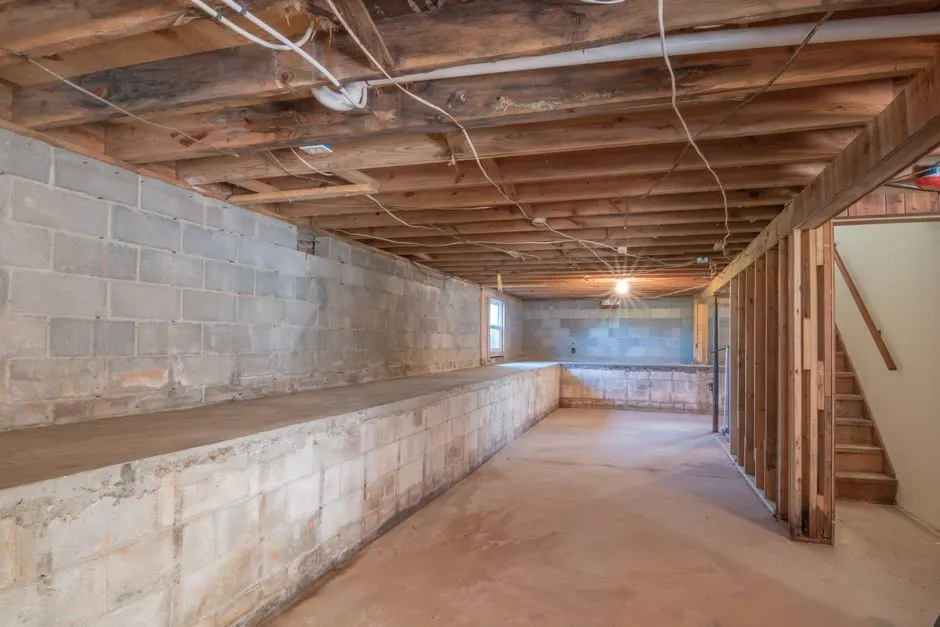
You prevent mold in a crawl space during wet seasons by keeping the space dry: seal exterior water entry points, control humidity below 60%, and ensure the vapor barrier is intact and continuous. In Spanish Fork, that means managing snowmelt in March and April, summer thunderstorms in July and August, and the high water table that lingers after both. The rest of this post covers the specific steps we take as a local mold inspection company, the costs you can expect in 2026, and the mistakes that make the problem worse.
Why crawl spaces get wet in Spanish Fork
Spanish Fork sits in a valley where spring snowmelt and summer monsoon rain both drain toward the same low points, and many crawl spaces are dug just below that grade. Water finds the path of least resistance - through foundation seams, around plumbing penetrations, and up through bare soil. We see this constantly in homes built before 1990 near the Spanish Fork River corridor, where original vapor barriers have torn or never existed.
Three things drive crawl space moisture here:
- Hydrostatic pressure. Saturated soil pushes water against foundation walls. After a wet March, that pressure can force a cup of water through a hairline crack every hour.
- Humid air. Utah's dry summers still deliver 40-60% relative humidity. When that air enters a cool crawl space, it condenses on joists and insulation.
- Poor drainage. Downspouts that dump within 3 feet of the foundation send thousands of gallons back toward the house each storm.
If your crawl space smells musty or you see white chalky deposits on the block, you likely have active moisture. A professional Crawl Space Mold Inspection Spanish Fork UT will confirm whether mold is growing and map the water source.
How to prevent mold in crawl spaces during wet seasons
Prevention is a sequence: stop water from entering, remove water that does, and keep the air dry. Skipping any step leaves a gap where mold returns within weeks.
1. Fix exterior drainage first
Extend every downspout at least 6 feet from the foundation. Regrade soil so it slopes away at 6 inches over the first 10 feet. In Spanish Fork, we often find that a single disconnected downspout is feeding an entire crawl space.
2. Repair the vapor barrier
A 6-mil or thicker polyethylene barrier should cover 100% of the crawl space floor, overlap seams by 12 inches, and run up the foundation walls 6 inches. Any tear larger than a fist lets ground moisture evaporate directly into the space.
3. Seal foundation cracks and penetrations
Use hydraulic cement or polyurethane injection for cracks wider than a credit card. Seal around pipes, wires, and ducts with closed-cell foam. This is the same water intrusion detection Spanish Fork Utah work we do during a Moisture Mapping Spanish Fork UT visit.
4. Control humidity mechanically
Run a crawl space dehumidifier sized for the square footage - typically 70 pints per day for a 1,500 sq ft space. Set it to 50% relative humidity. Drain it to a condensate pump or outside, not into the crawl space.
5. Insulate and air-seal the rim joists
Rim joists are the coldest part of the crawl space and the first place mold appears. Closed-cell spray foam or rigid foam board with sealed edges stops condensation there.
6. Keep the space accessible
You cannot prevent what you cannot see. Maintain a clear access hatch and inspect after every major storm or snowmelt. A crawl space mold prevention Spanish Fork checklist starts with a flashlight and a moisture meter.
Crawl space encapsulation Spanish Fork UT
Encapsulation is the most reliable long-term fix: a sealed, heavy-duty liner covering the floor and walls, often paired with a dehumidifier and a sump pump. It isolates the crawl space from ground moisture and outdoor humidity entirely. Typical 2026 pricing in this area runs $4,500 to $12,000 depending on square footage, existing damage, and whether a sump system is added.
Encapsulation prevents mold only if the space is dry before the liner goes down. If you seal over active mold, you trap spores and the problem worsens. That is why we always recommend a Mold Sampling and Lab Analysis Spanish Fork UT before any encapsulation project begins.
Crawl space ventilation mold Spanish Fork
Old advice said open the vents. In Spanish Fork's climate, that backfires. Our summers are dry but our winters are cold, and our spring and fall bring rain. Open vents pull humid outdoor air into a cool crawl space, where it condenses on joists and insulation. The result is mold on the underside of your floor.
Modern building science for this region favors closed crawl spaces: sealed vents, encapsulated ground, and mechanical humidity control. If your home was built with foundation vents, we can assess whether closing them makes sense for your specific setup. A Ventilation and Humidity Control Assessment Spanish Fork UT measures actual airflow and humidity before we recommend changes.
Common mistakes that make crawl space mold worse
We see the same five errors on almost every crawl space mold prevention Spanish Fork call. Avoiding them saves you thousands in remediation.
- Running a box fan instead of a dehumidifier. Fans move humid air around; they do not remove moisture.
- Using a thin 4-mil plastic barrier. It tears during installation and within a year. Use 6-mil minimum, 10-mil or 12-mil for encapsulation.
- Sealing vents without addressing ground moisture. You trap humidity inside. Always encapsulate the floor first.
- Spraying bleach on moldy joists. Bleach kills surface mold on non-porous surfaces but does not penetrate wood. It also adds moisture. Use a dedicated antimicrobial or call a professional.
- Ignoring the smell. A musty odor means active mold. By the time you see it, colonies have likely been growing for weeks.
If you are already seeing black staining on joists or insulation, do not wait. A Mold Inspection Spanish Fork UT gives you a clear picture of the extent and the source.
When to call a professional
Call us when you see or smell mold, when your vapor barrier is torn or missing, when you find standing water after a storm, or when you are buying a home and the crawl space has never been inspected. We handle crawl space moisture control Spanish Fork Utah homeowners need - from moisture mapping and thermal imaging to lab sampling and a written remediation protocol.
We also work with homeowners across Mold Inspection Spanish Fork UT on prevention plans that fit their specific foundation type and drainage. If you are not sure whether you have a problem, start with an inspection. It is cheaper than remediation.
Frequently Asked Questions
How do I prevent crawl space mold in Spanish Fork?
Keep the space dry: extend downspouts 6 feet, repair the vapor barrier, seal foundation cracks, and run a dehumidifier set to 50% relative humidity. Inspect after every snowmelt and storm. If you see mold or smell mustiness, get a professional inspection before it spreads.
Why is my crawl space wet in Spanish Fork UT?
Three common causes: snowmelt and rain draining toward the foundation, a torn or missing vapor barrier allowing ground moisture to evaporate upward, and humid summer air condensing on cool joists. Hydrostatic pressure after wet springs is the most frequent culprit we find.
Does crawl space encapsulation prevent mold in Spanish Fork Utah?
Yes, if the space is dry and mold-free before installation. Encapsulation seals the floor and walls from ground moisture and outdoor humidity. If active mold is present, it must be remediated first, or you trap spores and the problem worsens.
How often should crawl space be inspected in Spanish Fork?
Inspect annually, ideally in early spring after snowmelt. If your home has a history of moisture issues or you live near the Spanish Fork River, inspect every six months. After any major storm or plumbing leak, check immediately.
What humidity level prevents mold in a crawl space?
Keep relative humidity below 60%, ideally between 45% and 55%. Mold needs sustained humidity above 60% to grow. A crawl space dehumidifier sized for your square footage will maintain that range year-round.
Get help with Mold Inspection in Spanish Fork
If your crawl space stays wet or you have seen signs of mold, we can inspect it, find the source, and give you a clear plan. Call Spanish Fork Mold Pros at 555 123 4657 to schedule your crawl space mold inspection.